When funding traditional property into a revocable living trust or coordinating assets under a durable power of attorney, attorneys and clients record deeds with the county clerk, re-title physical bank accounts, or register transfer-on-death (TOD) designations. Digital assets cannot be re-titled or transferred to a trust or power of attorney in the same way. Access […]

More articles
Why “Funding” Digital Assets Requires Special Action When funding traditional property into a revocable living tr ..
The James Dean Cautionary Tale: Why the “Default Plan” Fails To understand the risk of dying without a plan, we can look ..
February 3, 2026 

Oklahoma Mineral Probate Tip: Avoid an Extra Transfer When a Trust Is Involved Mineral probates in Oklahoma often involve families who did .. January 19, 2026 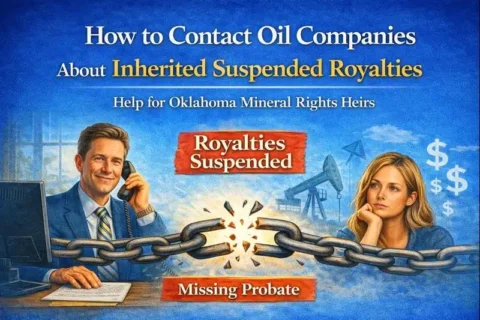
How to Contact Oil Companies About Inherited Suspended Royalties Why are my Oklahoma oil royalties in suspense? If you have i .. January 16, 2026 
Maximizing the Value of Your Garfield County Mineral Interests Garfield County, anchored by Enid, is a powerhouse in the No .. January 16, 2026 
Maximizing the Value of Your Ellis County Mineral Interests Ellis County, located on the far western edge of Oklahoma, i .. January 16, 2026 
Maximizing the Value of Your Roger Mills County Mineral Interests Roger Mills County, located on the western edge of Oklahoma, .. January 16, 2026 
Maximizing the Value of Your Major County Mineral Interests Major County is a vital component of the STACK play (Sooner .. January 16, 2026 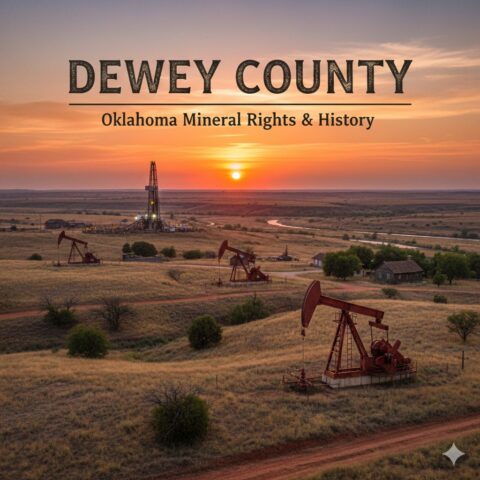
Maximizing the Value of Your Dewey County Mineral Interests Major County is a vital component of the STACK play, with si ..Client Testimonials

Richard Winblad was recommended to me to help my husband & I draw up several legal documents. I am very pleased with his ability to make us feel comfortable as we had to make some decisions that were not easy. He had very helpful advice and willing to listen to our feelings and desires. He is very knowledgeable in his field and compassionate as a person. I highly recommend him for all legal matters. Barbara S.
Barbara S

7 years of Alzheimer's has robbed my 92 year old mother of her mind and resources in the nursing center. Thanks to Richard’s knowledge and expertise, we now have financial help we did not know existed. Thank you Richard, Danny Johnson Family
Danny J

I am legal guardian for my grandmother who is now 97. We placed her in a nursing home about 3 years ago under private pay. When her money ran out I applied for Medicaid . After 3 case workers and 6 months of presenting document, we were denied. I asked for a fair hearing in the fair hearing the judge suggested a continuance. The result was an increase to 2 years of denial and about 130,000.00 . This is where Richard came along. He convinced them they were using the wrong method for their findings. "commensurate return" will be indelibly imprinted on my brain. I might name my next horse - c r . We still went to fair hearing where Richard represented us well. He was well versed in case law and the DHS process. Because of his hard work we WON, probably the biggest reversal in Oklahoma history. I am very grateful he came along at just the right time. Thank you, DLM
DLM
- Guardian for Grandmother Read about the Case